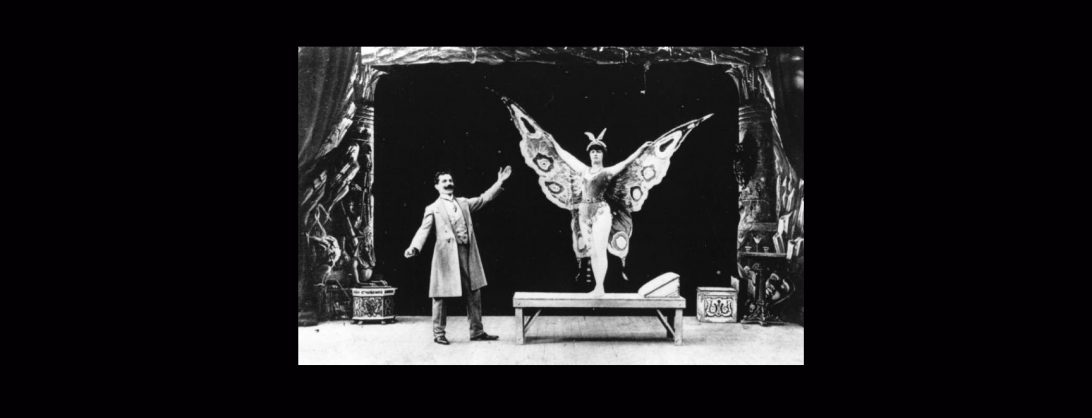

These days we are nostalgic for the future that might have been.
On July 17, 1955, with lots of hoopla and fol-de-rah, Disneyland opened in Anaheim, CA. As an enthusiastic fan of The Mickey Mouse Club (I tuned in everyday), giddy was the word to describe my thrill when my Dad announced that we would be going to Disneyland in the summer of ’56. It was to be one of the highlights of my young life.
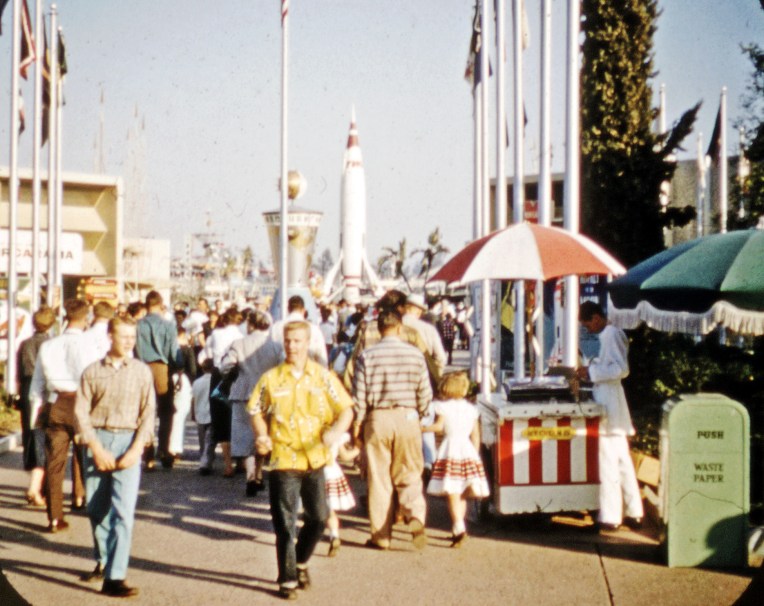
The photo of Flying Dumbo and the entry way to Tomorrowland were digitized from reels of photographs my dad took using his stereoscopic camera the 3-D View-Master. Seven pairs of stereoscopic color film images were mounted in a cardboard disc, which when viewed in a View-Master hand-held viewer or projector combined to give the picture an illusion of depth.
The then very modern 3-D technology gave a realistic and dimensional glimpse into the future. Stereoscopes, using pictures cards known as stereographs, had been a popular parlor entertainment since the 19th century. With the advent of the camera and the stereopticon projector, the idea of ”visual storytelling” was spawned that sparked the idea of moving pictures and film.
Today via virtual reality we can put ourselves in the picture having experiences that are taking place within simulated and immersive environments that are similar or completely different from the real world.
Back in the day, for everyday viewing, we had a hand-held device. For family entertainment we had the funny red-cyan glasses that we would don then project the reels onto a screen with special surface that reflected the polarized light that came from with a dual lens projector.


In the midst of dancing Goofy’s and adults with big mouse ears, spinning Madhatter teacups and the promise of the “Happiest Place on Earth,” Tomorrowland was designed to give visitors a walk-through experience of what life would be like in the future of 1986. Monsanto wanted to promote its plastics and Disney Imagineers wanted to incorporate a full-scale futuristic home, so these ideas merged together to form the House of the Future. The modular fiberglass home was prefabricated then assembled on-site. The house featured such farfetched conveniences as a microwave oven, ultrasonic dishwasher, cold areas in place of refrigerators and freezers, dimmable ceiling lights, climate control. Synthetic polymers in plastics, paints and fibers permeated the space. Almost everything was made of plastic — from the Melmac dishes to the durable laminate flooring.
Ultra-modern almost entirely synthetic. It’s was/is the future…
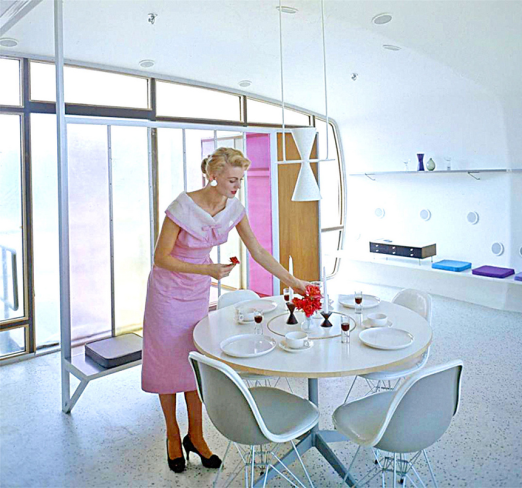
Although 1986 is long gone and I do not dress svelte or chic or couture in a pink pencil dress with a boat neck collar I do have an keen appreciation for plastic. It is, as Bernard Cooper writes, in Maps to Anywhere:
“It was the permanence, the durability of plastic that made the Monsanto house a marvel.”
 Future of Art