
My interest was piqued when, in my senior year in high school (1968), in history class we were given an assignment to write a book report about a document of our choice. How or why I chose Thomas More’s Utopia (1516) I can’t now remember but I did and that reading sparked my desire to live a different kind of life. I did not want that Monsanto House at Disneyland nor did I want to spend my time in the dull of Sacramento suburbia. I wanted to be a part of a bigger vision. I longed for an idyllic country life where all of my chickens had names and I knew the names of all of the birds in the sky. I wanted to go “back-to-the-land.”
Along with writing about More, I took a look at past examples of small communities of people united in a common purpose: the Oneida Community (founded 1848) in New York and the Amana Colonies (built 1855) in Iowa.
With the advent of the Whole Earth Catalog and the Mother Earth News my interest was informed by these how-to, DIY publications. I discovered that my personal longing was part of a larger social movement. There were many others like me, re-thinking how to live lightly on the planet. A variety of intentional communities, collectives, co-ops, communes, co-housing were established, each presenting a model lifestyle for humanity, showing ecological ways for people to share resources and live peacefully together. Still extant: The Farm in Tennessee (founded in 1971) , The Lama Foundation in New Mexico (founded in 1967), The New Alchemy Institute in Wood’s Hole (founded 1971).
Joel Sternfeld’s photoessay and accompanying text Sweet Earth: Experimental Utopias in America, records the win/lose of hope and resilience and in some cases demise of some historical and contemportary examples.
After doing my time in college, I couldn’t wait to get out of the smog-laden Los Angeles basin. On the search for a new place to settle, my journey took me north, yes, north to Alaska hitchhiking through the Yukon. Those days my anthem L.A. Freeway sung loud was:
Adios to all this concrete
Gonna get me some dirt road back streets
After going the distance to the Arctic Circle (thoughts of interminable winter darkness and cold did not fit with my vision of utopia) I returned south to California, ending up on Mt. Veeder on the west side of the Napa Valley. We were not a commune or an organization but rather a loose association of “households” on 40 acres who shared a vision of living as simply and as sustainably as possible.
We built “handmade houses” a yurt-like structure, a mushroom shaped pod using creative construction, imagination and insouciance — outside the constraints of standard building codes.
We lived off the grid — no electricity, water piped from a nearby stream.
We were devotees of bio-dynamic gardening ala Rudolf Steiner.
We wanted to raise goats and chickens.
Since we were a group of college-educated folks, not country bumpkins/ hicks we had what we thought were smart (smart-aleck?) ideas about animal husbandry. We thought we knew what we were doing. We experimented with ways to enhance chicken performance to maximize the production of our own fresh eggs.
Our birds were ordered from a glossy- color catalog from a hatchery in the mid-west. Before making our selections we poured over that booklet (like we did the seed catalogs). We wanted our brood to be not only good layers but good to look at — think heraldic feather crests. From the hatchery’s offerings of rare and ornamental varieties we decided on furry-legged Cochins, elegant Silkies, blue and green egg laying Arucanas and some solid Leghorns.


From the Illustrated Book of Poultry by Lewis Wright
Since we had postal service only via our P.O. Box, the peeping package arrived at the USPS office. I can still remember the astonished look on the clerk’s face as he slid the noisy box across the counter.
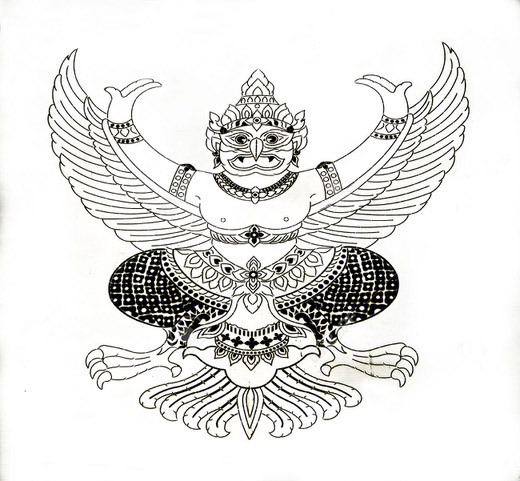
Our ideas about how to raise more robust chickens and boost their IQ were inspired by B.F. Skinner’s behavioral modification theories and his infamous training box. So along with the warm light in their cardboard incubator box, our chicken SEC (sensory enhancement chamber) included ramps, balls and mirrors, and a variety of stimulating toys strategically placed for their amusement. Looming large over the training area, to inspire our little flock to greatness was a picture of the mighty Garuda, the Hindu bird-god.
We were sure that lots of human handing and human names —Henrietta, Gloria, Pecky — would enhance their intelligence and make them less vulnerable to the foraging and ravages of raccoons. Needless to say, the efforts were not particularly effective. In the dark of night, one by one the grown chickens were plucked thorough the wire fencing. A bloody ruin of carcasses on one side of the fence…a tuft of feathers on the other.
Not so smart.
We hoped that all this special care might actually increase their IQ. HA! They still got eaten by the raccoons.
Even Thomas More, back in 1516, describing the agriculture and husbandry of Utopia, had ideas about the behavior modification of chickens:
They breed an infinity of chickens in a very curious manner. They are not hatched by hens, but a vast number of eggs are hatched together by means of an equable artificial warmth; and no sooner do the young quit the shell, than they consider their feeder as their dam, and follow man as other chickens do the hen.
Any discussion about chickens must conclude with a joke. OK! OK!
What do you get when you cross a chicken joke with a joke about the future?
I dream of a better future, a future where chickens can cross the road without being asked why.
And one more for the future:
The past, the present, and the future walk into a bar…. It was tense.
 Future of Art
One thought on “Utopia”