Chekhov’s Gun

cropped-future-of.jpg

“Chekhov’s Gun” refers to the words of the early 20th Century playwright and author Anton Chekhov: “If in Act One you have a pistol hanging on the wall, then it must fire in the last act.”

In the introduction for The Future of Art we posited that moving pictures would become the future. Georges Méliès was set as the progenitor of much we know today about magic and animation.

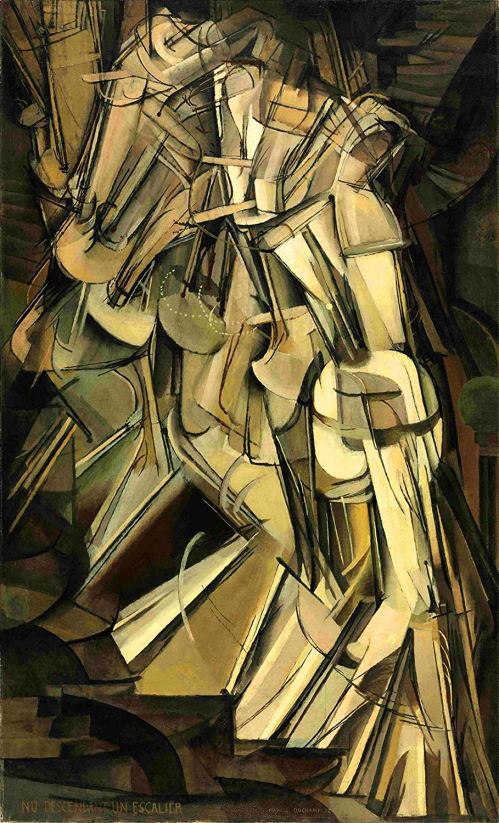
With this last act in our The Future of Art lessons, it is time to come full circle, connect the dots with Méliès and with me with a dollop of Duchamp thrown in because he was keen to poke a finger in the eye of retinal art. But, before he did, he painted one of the most famous and influential Cubist/Futurist images Nude Descending a Staircase (1912).

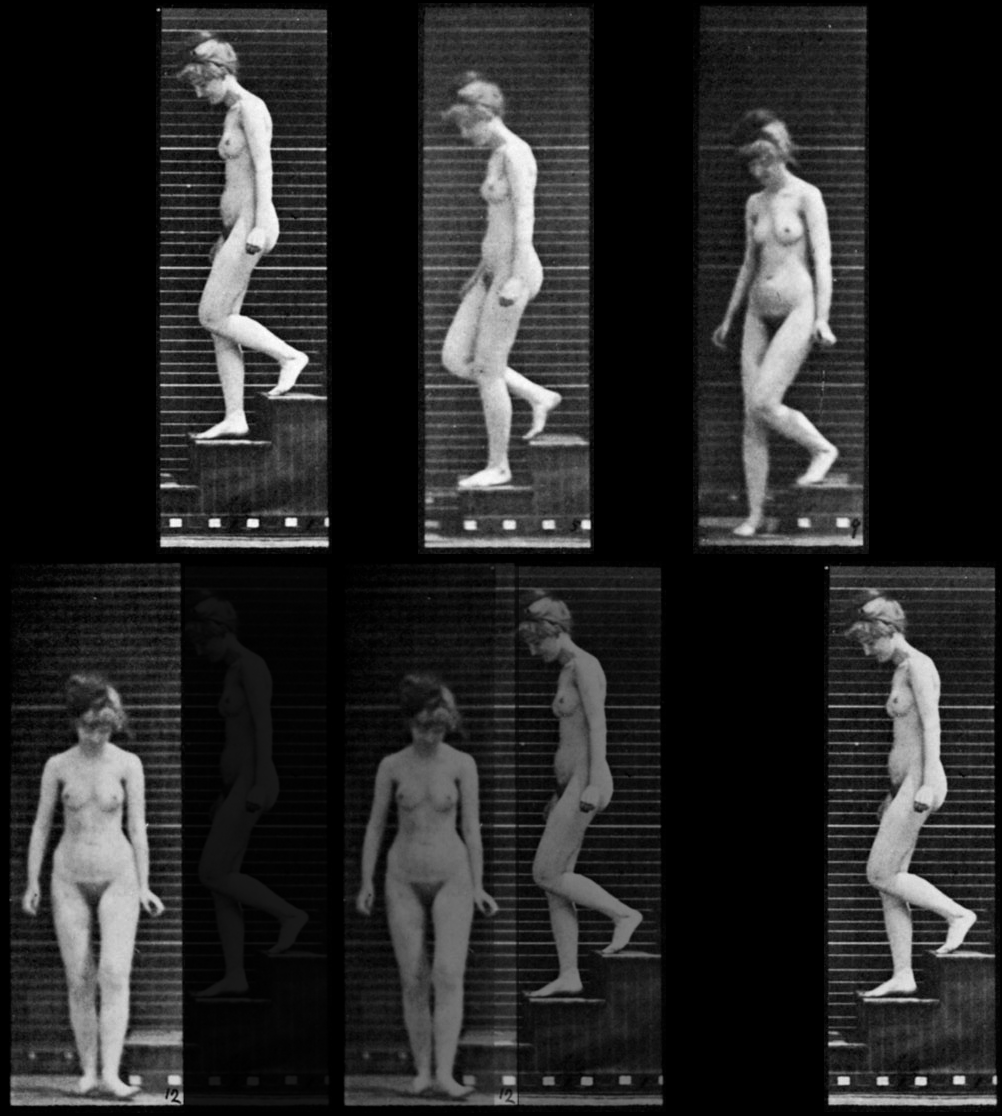
The optical effect is founded in Cubism with an added Futurist twist of motion in time. With the influence Eadweard Muybridges’ 1887 series The Human Figure in Motion along with an awareness of Étienne-Jules Marey early experiments with time-lapse photography, notice how the Nude approximates the blur one might see with time-lapse imagery.
Eadweard_Muybridge_1
Eadweard Muybridges’ series                       The Human Figure in Motion (1887)

81rQurxXzQL._SL1500_

Even Duchamp himself got in on the descending act— on display until November 10 at the Legion of Honor in Strange Days: Dada, Surrealism and the Book  Robert Lebel’s monograph Sur Marcel Duchamp (1959)

IMG_5700

Painted in 1912, the same year as the Nude, Giacomo Balla’s Dynamism of a Dog on A Leash is one of the most famous Futurist paintings. The dachshund scurrying at the feet of a woman appears to be a stop-action, frame by frame capture of an energetic moment in time.

Giacomo_Balla,_1912,_Dinamismo_di_un_Cane_al_Guinzaglio_(Dynamism_of_a_Dog_on_a_Leash),_Albright-Knox_Art_Gallery

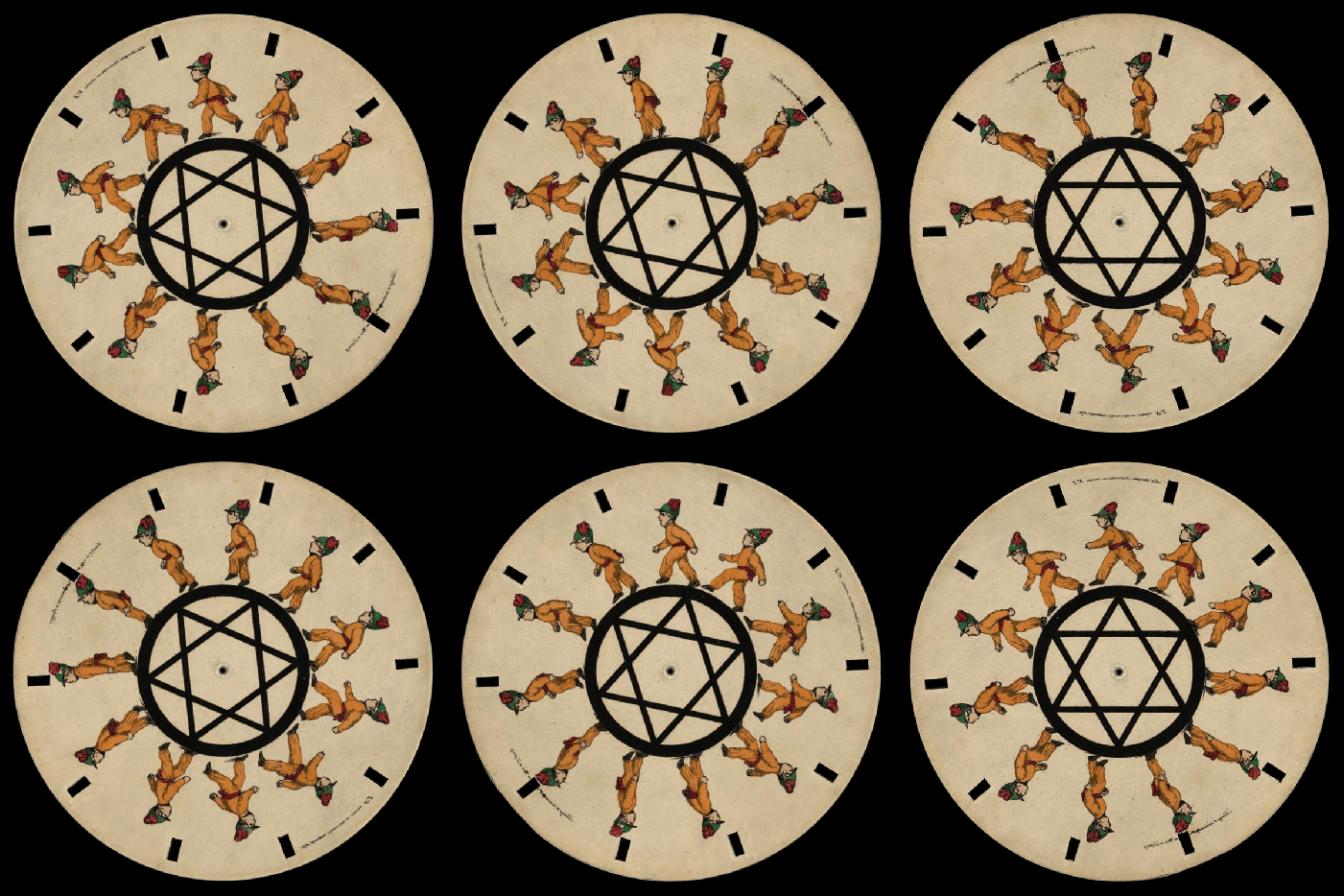
Prof._Stampfer's_Stroboscopische_Scheibe_No._X
Professor Stampfer’s Stroboscopische Scheibe No. X 1833

Many of the principles behind motion pictures were understood well before the invention of “the movies.”

In 1833 Simon Ritter von Stampfer experimented with stroboscope effects where images on a spinning disc appeared as if moving. 

In 1877 photographer Eadweard Muybridge created a sequence of 24 images of a running horse, taken by 24 cameras and, dare I say, motion pictures were soon off and running. 

In 1882 when Étienne-Jules Marey camera took bursts of sequential photographs, the basic building blocks for the creation of motion pictures were invented. 

In 1888 Thomas Edison met Eadweard Muybridge then worked to create a camera and projection system that reproduced vision the way the phonograph he was working on reproduced sound.

In 1890 French theater director and magician Georges Méliès was the first true master of cinematic techniques. His A Trip to the Moon, (1902) became the first internationally successful motion picture, and the first science fiction film. 

Movie mastermind Méliès’ animation and a number of his special effects are based on stop-motion photography. Mention must be made of the theory of the “persistence of vision” a somewhat controverisal idea that what we see is a subtle blend of what we are seeing now and what we just saw. A bridge connecting now and then makes things appear as if in motion.

Here is Méliès, sci-fi cinematic sensation A Trip to the Moon 1902. Talk about a vision of the future.!!!


Utopia

moreutopia-wl

My interest was piqued when, in my senior year in high school (1968), in history class we were given an assignment to write a book report about a document of our choice.  How or why I chose Thomas More’s Utopia (1516) I can’t now remember but I did and that reading sparked my desire to live a different kind of life. I did not want that Monsanto House at Disneyland nor did I want to spend my time in the dull of Sacramento suburbia. I wanted to be a part of a bigger vision. I longed for an idyllic country life where all of my chickens had names and I knew the names of all of the birds in the sky. I wanted to go “back-to-the-land.”

Along with writing about More, I took a look at past examples of small communities of people united in a common purpose: the Oneida Community (founded 1848) in New York and the Amana Colonies (built 1855) in Iowa. 

With the advent of the Whole Earth Catalog and the Mother Earth News my interest was informed by these how-to, DIY publications. I discovered that my personal longing was part of a larger social movement. There were many others like me, re-thinking how to live lightly on the planet. A variety of intentional communities, collectives, co-ops, communes, co-housing were established, each presenting a model lifestyle for humanity, showing ecological ways for people to share resources and live peacefully together. Still extant: The Farm in Tennessee (founded in 1971) , The Lama Foundation in New Mexico (founded in 1967), The New Alchemy Institute in Wood’s Hole (founded 1971).

Joel Sternfeld’s photoessay and accompanying text Sweet Earth: Experimental Utopias in America, records the win/lose of hope and resilience and in some cases demise of some historical and contemportary examples.

After doing my time in college, I couldn’t wait to get out of the smog-laden Los Angeles basin. On the search for a new place to settle, my journey took me north, yes, north to Alaska hitchhiking through the Yukon. Those days my anthem L.A. Freeway sung loud was:

Adios to all this concrete
Gonna get me some dirt road back streets

After going the distance to the Arctic Circle (thoughts of interminable winter darkness and cold did not fit with my vision of utopia) I returned south to California, ending up on Mt. Veeder on the west side of the Napa Valley. We were not a commune or an organization but rather a loose association of  “households” on 40 acres who shared a vision of living as simply and as sustainably as possible. 

We built “handmade houses” a yurt-like structure, a mushroom shaped pod using creative construction, imagination and insouciance — outside the constraints of standard building codes. 

We lived off the grid — no electricity, water piped from a nearby stream.

We were devotees of bio-dynamic gardening ala Rudolf Steiner.

We wanted to raise goats and chickens.

Since we were a group of college-educated folks, not country bumpkins/ hicks we had what we thought were smart (smart-aleck?) ideas about animal husbandry. We thought we knew what we were doing. We experimented with ways to enhance chicken performance to maximize the production of our own fresh eggs.

Our birds were ordered from a glossy- color catalog from a hatchery in the mid-west. Before making our selections we poured over that booklet (like we did the seed catalogs). We wanted our brood to be not only good layers but good to look at  — think heraldic feather crests. From the hatchery’s offerings of rare and ornamental varieties we decided on furry-legged Cochins, elegant Silkies, blue and green egg laying Arucanas and some solid Leghorns.


From the Illustrated Book of Poultry by Lewis Wright

Since we had postal service only via our P.O. Box, the peeping package arrived at the USPS office. I can still remember the astonished look on the clerk’s face as he slid the noisy box across the counter.

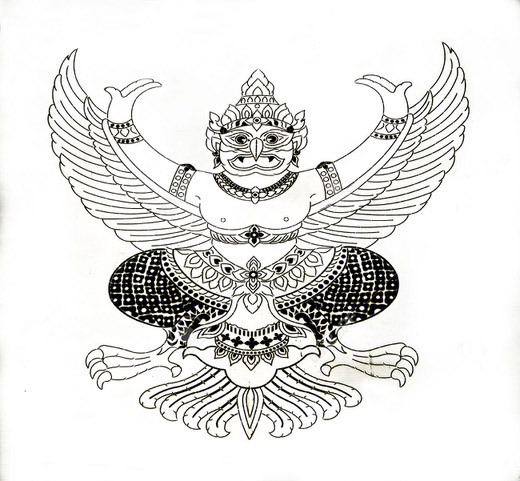
Our ideas about how to raise more robust chickens and boost their IQ were inspired by B.F. Skinner’s behavioral modification theories and his infamous training box. So along with the warm light in their cardboard incubator box, our chicken SEC (sensory enhancement chamber) included ramps, balls and mirrors, and a variety of stimulating toys strategically placed for their amusement. Looming large over the training area, to inspire our little flock to greatness was a picture of the mighty Garuda, the Hindu bird-god.

Pattern Line of garuda on white background


We were sure that lots of human handing and human names —Henrietta, Gloria, Pecky — would enhance their intelligence and make them less vulnerable to the foraging and ravages of raccoons. Needless to say, the efforts were not particularly effective. In the dark of night, one by one the grown chickens were plucked thorough the wire fencing. A bloody ruin of carcasses on one side of the fence…a tuft of feathers on the other.

Not so smart.

We hoped that all this special care might actually increase their IQ. HA! They still got eaten by the raccoons.

Even Thomas More, back in 1516, describing the agriculture and husbandry of Utopia, had ideas about the behavior modification of chickens:

They breed an infinity of chickens in a very curious manner. They are not hatched by hens, but a vast number of eggs are hatched together by means of an equable artificial warmth; and no sooner do the young quit the shell, than they consider their feeder as their dam, and follow man as other chickens do the hen.


Any discussion about chickens must conclude with a joke. OK! OK!

What do you get when you cross a chicken joke with a joke about the future?

I dream of a better future, a future where chickens can cross the road without being asked why.


And one more for the future:

The past, the present, and the future walk into a bar….                                                              It was tense.


Que Será, Será

My grandmother’s upbeat philosophy of life was guided by the simple phrase, When life gives you lemons, make lemonade. She was always a glass half-full kind of gal and wanted to encourage in everyone a positive can-do attitude in the face of adversity or misfortune. 

Her recipe for success: lemons may be sour but with a dash of sugary sweetness they can be turned into delicious glass of refreshing lemonade.

And she often hummed the Doris Day classic Que Será, Será from the Alfred Hitchcock film The Man Who Knew Too Much. There was something optimistic in her ideas about just letting the future be what it will be. But along the way I lost sight of that simple philosophy.

In my ambitious 30’s, 40’s I was obsessed with going somewhere, getting somewhere. Goal setting was a big part of that obsession. I had my 1 year plan, my 5 year plan, my 10 year plan, my big future plan. I kept charts and graphs. I kept calendars. I kept lists. Motivational speakers and workshops cajoled and cheerleaded me into consciously creating my future. A DAY-TIMER® purse calendar was my friend and time management  ideas help set my goals. I believed that by setting a goal and diligently working away at it was the best way to proceed. The Interent abounds with advice about how to get started. I took all of these to heart:

  • Set Specific Goals. Your goal must be clear and well defined. …
  • Set Measurable Goals. Include precise amounts, dates, and so on in your goals so you can measure your degree of success. …
  • Set Attainable Goals. Make sure that it’s possible to achieve the goals you set. …
  • Set Relevant Goals. …
  • Set Time-Bound Goals.20190102_HeroImage_DTV2_main


The days leading up to New Year’s Day were spent reviewing my accomplishments, calculating my success for the year past and setting my course in categories for the upcoming — work, career, relationships, exercise, art.

But one year, at the cusp of the year, I had a life-changing revelation. As I reflected back, I realized that the best things that had happened during the past year were surprises, unplanned happenstances, not envisioned, not on my list of goals.

Serendipity was the key. (what will be, will be) Then, using the happy accident, maximizing the unexpected, became my strategy as I transformed accident into opportunity.

In 1999, meeting a partner/husband was far from my mind but, on the fateful day I met Richard, my whole life changed and so much for the better. On that momentous first date…

One of the great pleasures of going to the beach is in the not-knowing. Not-knowing what what will be found and what kind of creative response that find will inspire.

What goes round…

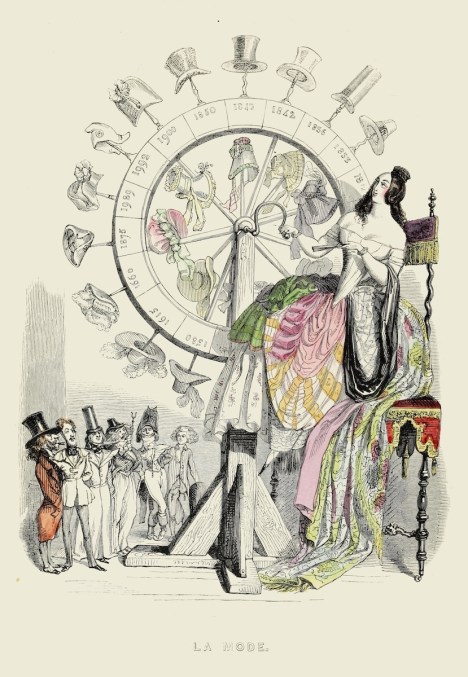
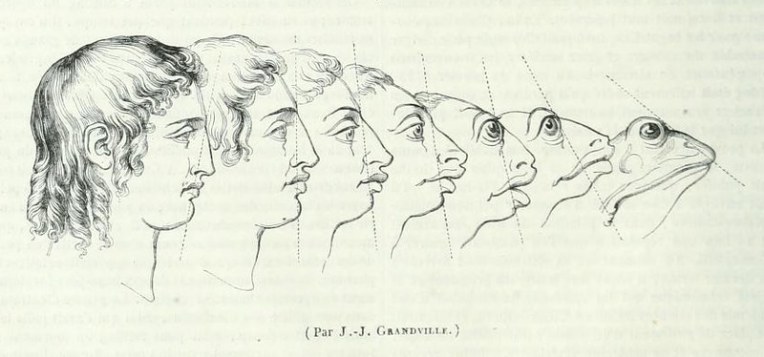
There is a timeline for this and a timeline for that. They come in circular and in round – linear and omni-directional. When I found J.J. Grandville’s timeline of stylish hats I tipped mine and LOL. What goes round, comes round.

44013003975_63341e6482_o

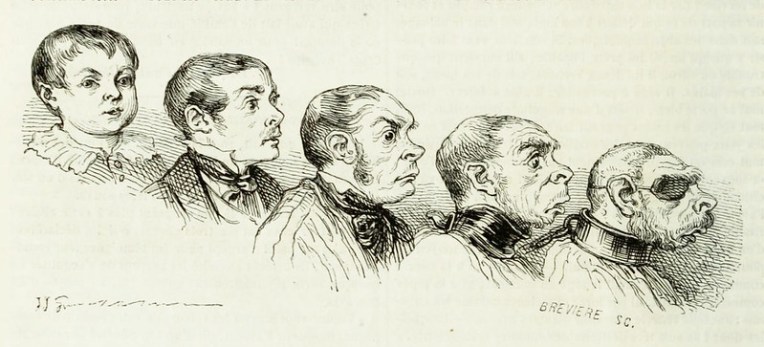
Grandville made all manner of illustrations, topical to his times and his interpretation of time. Charles Darwin’s Voyage of the Beagle had been published in 1839. Grandville’s Man Descending towards the Brute and his Portraits Compared were riffs on and interpretations of evolution. Did he look towards progress/evolvement or does he project the slippery slope of devolvement?

44205304184_63f786a652_cMan Descending towards the Brute, from Le Magasin pittoresque, April 1843
44875502032_96377d51ea_cPortraits Compared, from Le Magasin pittoresque, August 1844
 

Clock of Eras2


The Clock of Eras is here to help us visualize geologic time. It is almost impossible for the human mind to comprehend the amount of time that it has taken for the Earth to develop to its present state, yet we try to imagine each stage of its unfolding and the time that passed during each phase of development. The Cenozoic is the era we live in, though we could hardly say this is the era of humans. We have been present as a species only about 1.5 million years of the 65 million years of the current era. That represents about 7 seconds (in red) on the clock of eras!

Humans = only seven seconds. And you and me = even less than the blink of an eyelid.

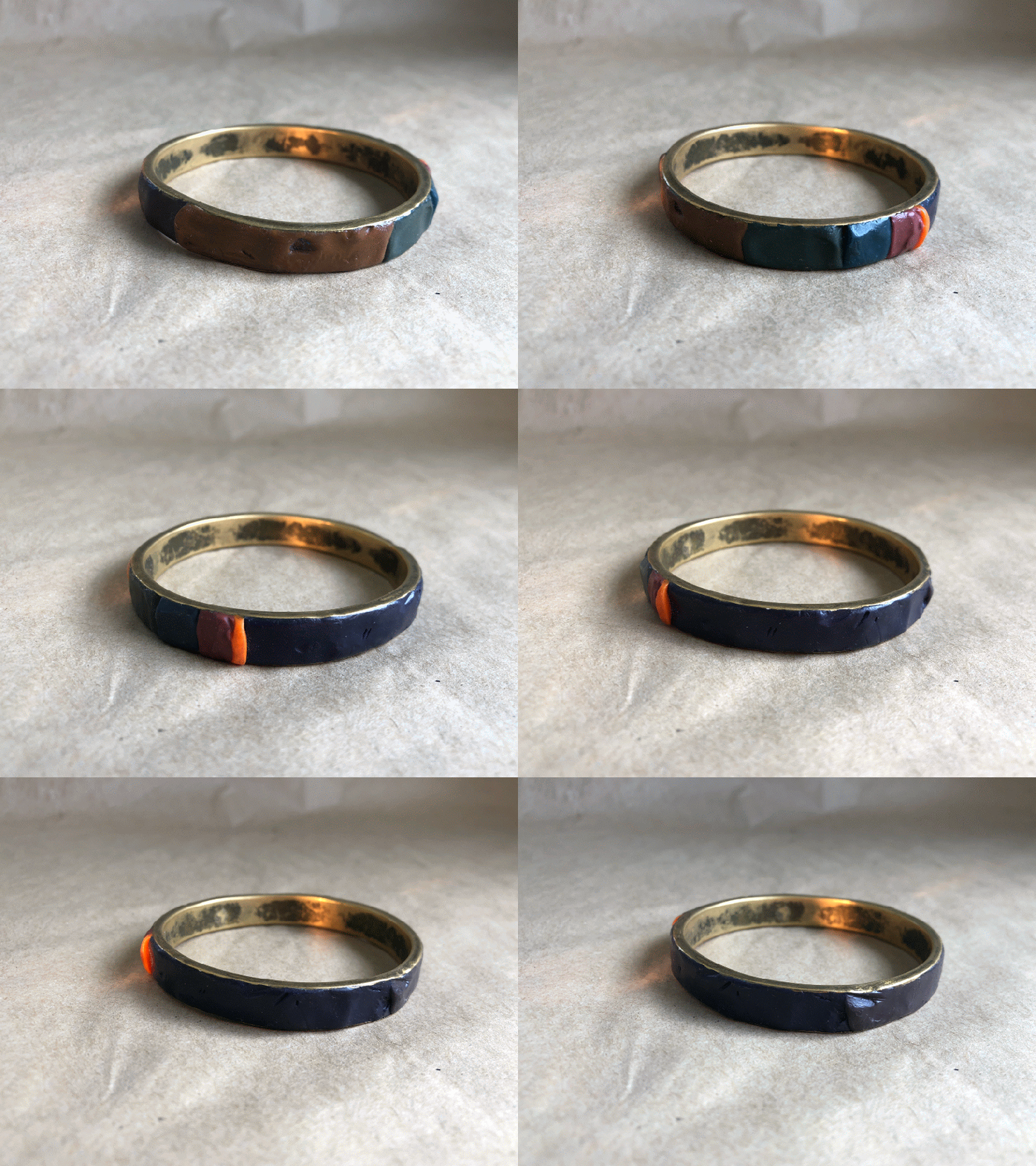
In my own go-round with time I created a Geological Timepiece, the watch I wear when I want to know my place in the great scheme of things. When I want time of my life to be put into proper perspective.

On this bracelet the thin slip of orange, a hair’s breath, represents the amount of time we humans have been on the planet. As this bracelet turns, it passes by each of the eras.

To contemplate the vastness reminds of the importance of finding meaning in our own smallness because being human, human being is a big deal.

7812CF58-7859-484D-A78C-3D24E405E462


What goes round, comes round…

Tomorrowland

Jselby-001 

These days we are nostalgic for the future that might have been.

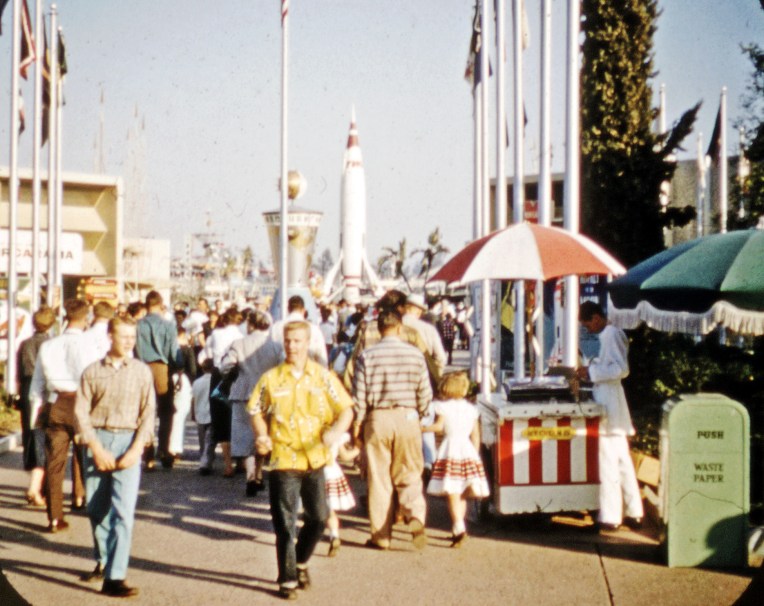
On July 17, 1955, with lots of hoopla and fol-de-rah, Disneyland opened in Anaheim, CA. As an enthusiastic fan of The Mickey Mouse Club (I tuned in everyday), giddy was the word to describe my thrill when my Dad announced that we would be going to Disneyland in the summer of ’56. It was to be one of the highlights of my young life.  

Jselby-012

The photo of Flying Dumbo and the entry way to Tomorrowland were digitized from reels of photographs my dad took using his stereoscopic camera the 3-D View-Master. Seven pairs of stereoscopic color film images were mounted in a cardboard disc, which when viewed in a View-Master hand-held viewer or projector combined to give the picture an illusion of depth. 

The then very modern 3-D technology gave a realistic and dimensional glimpse into the future. Stereoscopes, using pictures cards known as stereographs, had been a popular parlor entertainment since the 19th century. With the advent of the camera and the stereopticon projector, the idea of ”visual storytelling” was spawned that sparked the idea of moving pictures and film.  

Today via virtual reality we can put ourselves in the picture having experiences that are taking place within simulated and immersive environments that are similar or completely different from the real world.

Back in the day, for everyday viewing, we had a hand-held device. For family entertainment we had the funny red-cyan glasses that we would don then project the reels onto a screen with special surface that reflected the polarized light that came from with a dual lens projector.   


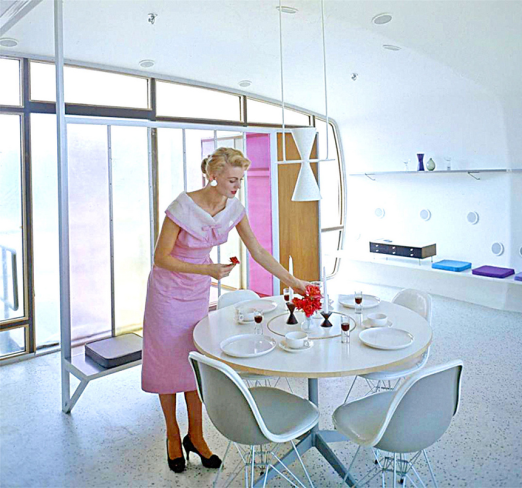
In the midst of dancing Goofy’s and adults with big mouse ears, spinning Madhatter teacups and the promise of the “Happiest Place on Earth,” Tomorrowland was designed to give visitors a walk-through experience of what life would be like in the future of 1986. Monsanto wanted to promote its plastics and Disney Imagineers wanted to incorporate a full-scale futuristic home, so these ideas merged together to form the House of the Future. The modular fiberglass home was prefabricated then assembled on-site. The house featured such farfetched conveniences as a microwave oven, ultrasonic dishwasher, cold areas in place of refrigerators and freezers, dimmable ceiling lights, climate control. Synthetic polymers in plastics, paints and fibers permeated the space. Almost everything was made of plastic — from the Melmac dishes to the durable laminate flooring.

Ultra-modern almost entirely synthetic. It’s was/is the future… 

8

Although 1986 is long gone and I do not dress svelte or chic or couture in a pink pencil dress with a boat neck collar I do have an keen appreciation for plastic. It is, as Bernard Cooper writes, in Maps to Anywhere:

“It was the permanence, the durability of plastic that made the Monsanto house a marvel.”

What’s the Point?

The Future of Art—What’s the Point?

Buddha says to the hotdog vendor, “Make me one with everything!”

Do we see the flow of history, the flow of art history, as a developmental gyre always moving in a rising spiral? Having passed thorough the POMO’s (Post-modernism) “end of history” where the smarties of the world often eschewed a directional point as part of their philosophical gravitational pull—Welcome to Derrida’s pointless forest. Whether things move toward a point depends on where you are standing, and when you are standing in the pointless forest of POMO, YOU are the point, which leads to a lot of individuation though often masquerading as narcissism. It’s good to be finding our way out of the pointless forest. Glossing up Harry Nilsson’s animated film The Point where our star Oblio and his faithful hound Arrow make their way through said Pointless Forest in search of acceptance.

https://youtu.be/z5y6L6He8Bo

No, boys and girls we are not at the postmodernist’s “end of history”because there is no such thing. There is where we find the end of Deconstruction because there actually was no such thing as deconstruction. If we accept that art is a vital part of the human genome in action suddenly the confusions of Contemporary Art vaporize. We come back to our senses even though Deconstruction was a fun mental ride.

Since we’re talking in “Relative” terms here we come back to Einstein who said, “God does not play dice with the Universe.” Since everything in the universe is always in motion, where one stands is always in relationship to everything else. In terms of understanding Art we come back to the idea that maybe there actually is a point being that metaphorical thinking is a part of this human genome thing.

But that’s what we’ve come to, allowing the point of things to return. The arrival at a new devotion to the point we had to give up on coming to the point, wander through the Pointless Forest and back out to where the world becomes full of meaning once again—luminous, brightly revealing itself in endless wonder.

Good to eat, good to think as anthropologist Claude Levi-Strauss pointed out—we are nourished. Point taken.

Good ole’ Aristotle.

Timeless Time

Watches Kodak1
Time present. Time past. Time future.
          Time. It rules our lives. Got to get here. Got to get there. Be on time. There is a never enough time to do the things we want and need to do. Is there a way to get more of it? Get up earlier? Go to bed later? Organize ones time better?
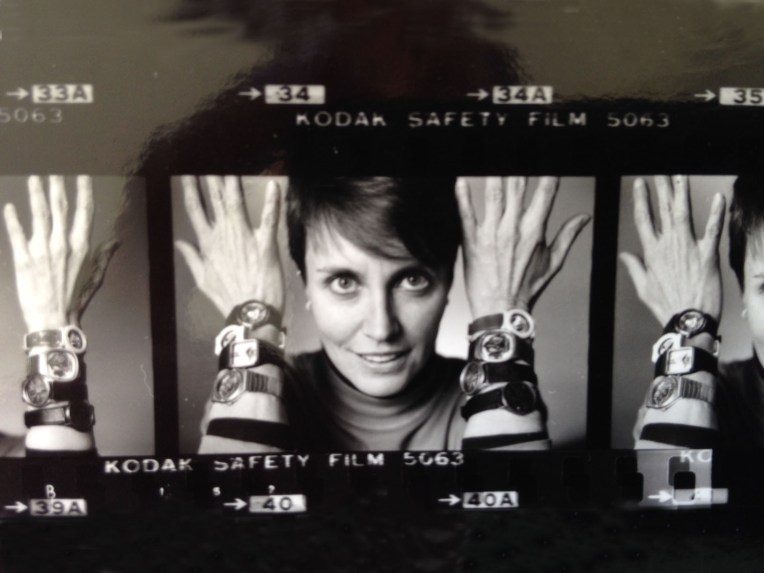
          Stuck in a traffic jam, you are sweating late… your tension level is maxing out, then you glance down at your TimelinE watch and you can’t help but laugh. Yes, you are wearing a watch but it does not tell you the time in a chronological sense. It is asking you take a time out; take a deep breath; to think about what’s the big hurry.
Timeless IMG_4604
The Timeless Void
          To figure out the cause of my debilitating headaches that seared as if a red- hot poker had been stabbed down the base of my skull, I had tests and more tests — MRI, CT Scan. I’d checked off the list of home and folk remedies, but nothing would alleviate. Kaiser finally sent me to a psychologist to see if the problem was just in my head. The doctor and I talked and talked, trying to find some event that might have triggered the pain but nothing added up to the cause. He eventually thought that hypnosis might help to overcome my anxiety and stress. Along with the headaches, I was a frantic mess because there was too much to do and not enough time.
          He did not give the suggestion that I could now perform complex tap dance routines or cluck like a chicken. Once he had induced the hypnotic trance, the doctor asked me to envision a huge clock whose face was expanding in all directions. It was Daliesque with the edges of the clock dripping, melting over the edge of the horizon. It continued to stretch out to a far far away and when it could go no further it snapped and at once there was total blackness. No clocks. No stars. No nothing.
          What was I experiencing? Infinity? There were no images, no beginning, no end. Just time beyond all dimension. I was floating in a quivering blackness in what seemed to be an eternity; in what I had heard described as the “timeless void.” As the doctor gently brought me out of the trance, he cautioned that I should, in the next few days, be very careful. He could see that I had gone into some place deep and far away.
          As I awoke to this new reality, my sense of time was distorted, askew. Clocks didn’t jive. The next day, while walking down the ward to teach my class at the Yountville Veteran’s Home, the clock on one wall said 2:45 while the clock on the opposite wall at 2:49 was near but not exactly. Several students were wearing watches so I asked them what time it was. A minute this way or that, but no two people had the same time. It affirmed my revelation that time was/is a consensus reality; an agreed upon construct. Class begins at 2:45 so everyone always shows up then.
          Before I could even begin my lecture, in a flash, I was thunderstruck as proverbs (time flies, time heals) and measures (make and take, keep and spend) came to mind. As fast as I could, on a scrap of paper I jotted down the ideas and scribbled sketches. After class, I realized that I had to make these as metaphorical watches, that would instead of telling the time, would serve as reminders of the timeless void and the infinity of space/time.
          As an inveterate thrift-store shopper, my first thought was to repurpose used watches replacing the inner workings with my own diminutive paintings and sculptures. However, sourcing enough used ones was problematic. Fortunately, I was able to find a watch casings and band distributor in New York City who was willing to sell parts wholesale to a small time dealer like me.
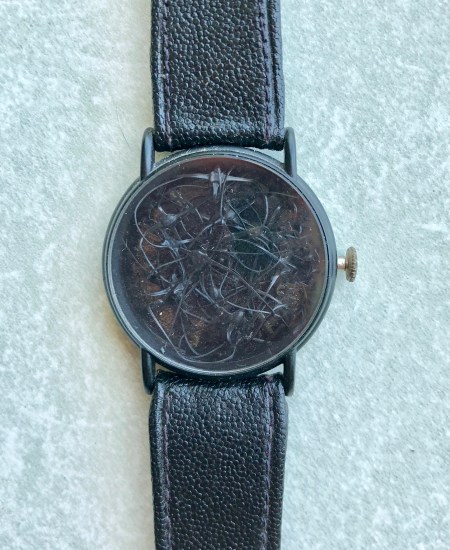
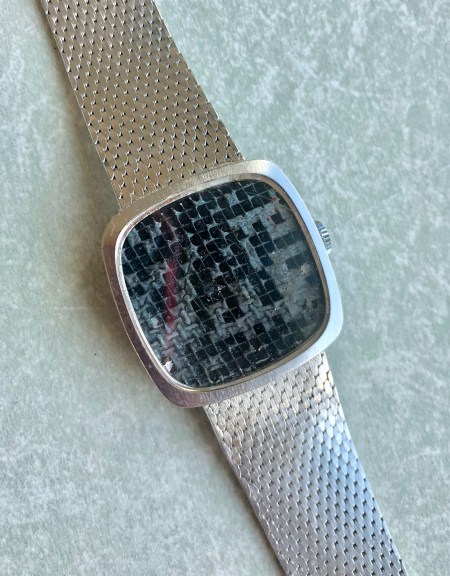
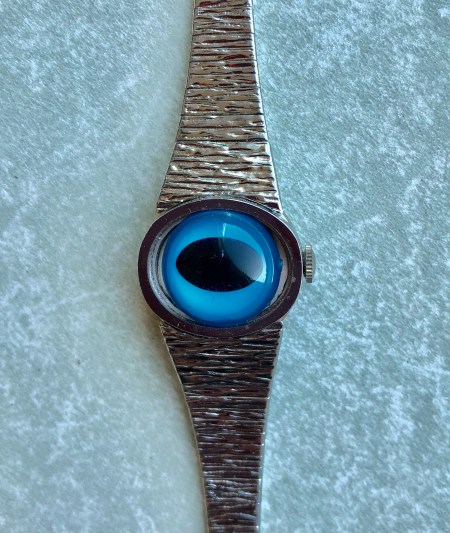
          Inside the empty watch casing, contemporary rubble was paired with prehistoric fossils. Bits and pieces of detritus were marshaled into use. A piece of window screen became The Web of Illusion. A thicket of garden netting became the timeless void. A mouse skull, picked from the regurgitated remains of an owl pellet, inspired the Georgia O’Keeffe Watch. A doll hand smashed through the watch cover was Out of Time. Sartre was done proud with Being and Nothingness and the glass eyeball on Watch Watch is doing just that.
IMG_4569
Web of Illusion

Each titled, signed, and dated watch was presented in a special box along with a label that described the philosophical intention of these meditative devices. They were featured in galleries in Napa, San Francisco, Los Angeles and New York. With articles in Glamour, SideStreet, The Chicago Tribune, I was busier than ever.

          Did the hypnosis solve my anxiety or cure the headaches? Did the making of timeless timepieces ease my fret about time? No, not really. Making and then marketing the watches, added yet another thing to do in an already jam-packed life. But as a timeless interpretation of immeasurable metaphor the last question a TimelinE watch would ever answer, do you have enough?
IMG_4579
Watch Watch
 

TA-DA


cropped-future-of.jpg
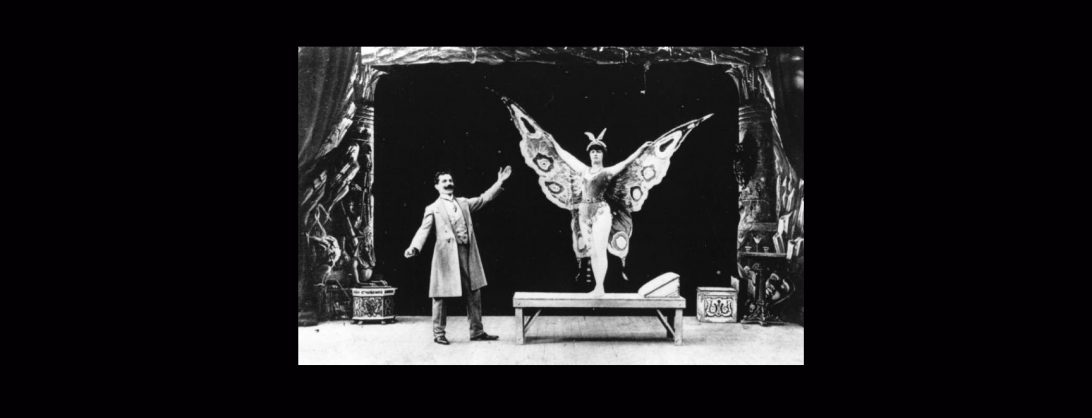
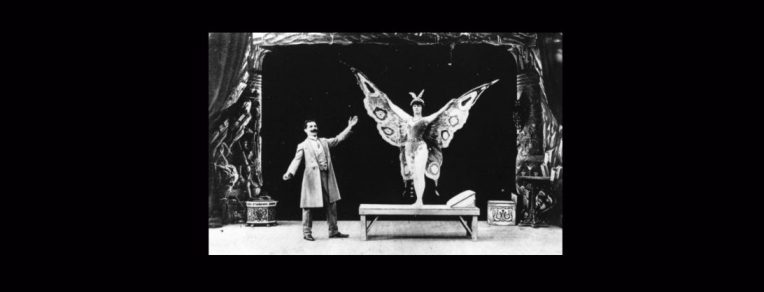
French actor/filmmaker Georges Méliès turning a sleeping woman into a butterfly.

Méliès was a hands-on artist, involved as director, writer, producer and set/costume designer in every stage of the performance production. He is credited with inventing as many as 30 new illusion tricks.

Méliès stands as an inspiring source for our Future of Art lessons. He could not have known what would transpire with magic and with moving pictures and how they would become the future.